

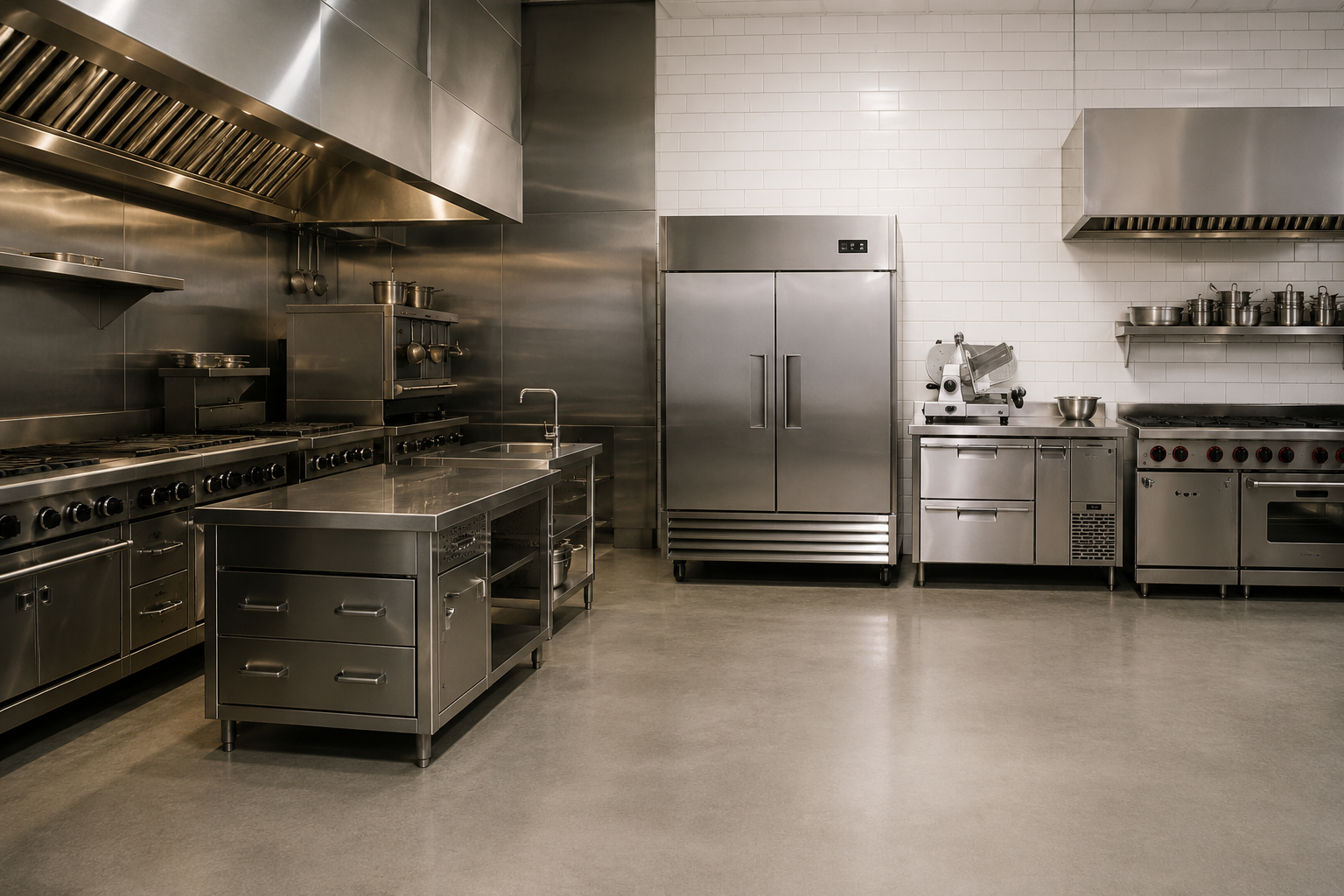
When setting up a restaurant, hotel, café, cloud kitchen, or institutional food service facility, one decision can influence your operations for years to come—choosing the right kitchen equipment.
Many business owners spend weeks refining menus, designing interiors, and planning marketing campaigns. However, the kitchen itself often receives less attention than it deserves.
The truth is simple: even the most talented chefs can struggle in a poorly designed kitchen.
Imagine a busy Saturday evening at a restaurant. Orders are flowing in, customers are waiting, and staff members are moving quickly between preparation, cooking, and serving stations. If the equipment layout creates bottlenecks or wastes valuable space, service slows down, productivity drops, and operational costs rise.
This is why many businesses evaluating commercial kitchen equipment India solutions often ask the same question:
Should I choose custom kitchen equipment or standard kitchen equipment?
The answer depends on several factors, including your budget, kitchen size, workflow requirements, and long-term business goals.
In this guide, we’ll break down the advantages and limitations of both options so you can make a confident, informed decision.
Quick Answer: Which Is Better, Custom Kitchen Equipment or Standard Equipment?
Custom kitchen equipment is generally the better choice for businesses that need optimized layouts, improved workflow efficiency, and specialized functionality.
Standard kitchen equipment is often the better choice for businesses looking for lower upfront costs, quicker installation, and proven performance.
For many restaurants, hotels, and cafés, a hybrid approach delivers the best results.
Featured Snippet Answer
Custom kitchen equipment is designed around a business’s unique operational requirements, while standard equipment follows pre-manufactured dimensions and specifications. Custom solutions offer better space utilization and workflow efficiency, whereas standard equipment provides affordability and faster deployment. The best choice depends on business needs, available space, and future growth plans.
Why Your Equipment Choice Matters More Than You Think
A commercial kitchen is more than a collection of ovens, counters, and refrigerators.
It’s a production environment.
Every movement made by your staff affects:
- Food preparation speed
- Service quality
- Operational efficiency
- Labor costs
- Customer satisfaction
A poorly planned kitchen can create ongoing challenges, including:
- Delayed service during peak hours
- Increased employee fatigue
- Wasted storage space
- Higher maintenance costs
- Reduced production capacity
On the other hand, a thoughtfully designed kitchen supports smoother operations and helps teams perform at their best.
Expert Insight
Experienced kitchen planners often focus on workflow before equipment selection.
Why?
Because equipment should support operations—not force operations to adapt to equipment.
Understanding Standard Kitchen Equipment
What Is Standard Kitchen Equipment?
Standard kitchen equipment refers to pre-manufactured products built according to industry-standard dimensions and specifications.
These products are widely available through kitchen equipment suppliers in India and are commonly used in:
- Restaurants
- Hotels
- Cafés
- Food courts
- Canteens
- Cloud kitchens
Common Examples
Cooking Equipment
- Commercial gas ranges
- Deep fryers
- Ovens
- Grills
Refrigeration Equipment
- Refrigerators
- Freezers
- Cold storage units
Preparation Equipment
- Stainless steel work tables
- Sink units
- Storage racks
Because these products are mass-produced, they tend to be more affordable and readily available.
Advantages of Standard Kitchen Equipment
1. Lower Initial Investment
One of the biggest benefits is affordability.
Businesses with limited startup budgets can often establish operations without making large capital investments.
2. Faster Installation
Since equipment is already manufactured, procurement and installation timelines are shorter.
3. Proven Reliability
These products have been used successfully across thousands of food service operations.
4. Easier Replacement
Finding compatible replacements is typically straightforward.
Limitations of Standard Kitchen Equipment
Despite its advantages, standard equipment has limitations.
These may include:
- Unused spaces within kitchen layouts
- Limited customization options
- Reduced workflow optimization
- Challenges with specialized food preparation processes
What Is Custom Kitchen Equipment?
Custom kitchen equipment is designed specifically for the operational needs of a particular business.
Instead of adapting your kitchen around equipment dimensions, the equipment is designed around your kitchen.
This approach is becoming increasingly popular among businesses seeking:
- Better workflow efficiency
- Higher productivity
- Improved space utilization
- Greater operational flexibility
Common Examples of Custom Equipment
Customized Preparation Counters
Designed to match workflow requirements and available floor space.
Tailor-Made Storage Systems
Created to maximize storage capacity without affecting movement.
Specialized Cooking Stations
Built around specific menu requirements.
Modular Workstations
Allow future modifications and expansion.
Custom Kitchen Equipment vs Standard Equipment: Side-by-Side Comparison
| Feature | Standard Equipment | Custom Equipment |
| Initial Cost | Lower | Higher |
| Installation Time | Faster | Longer |
| Space Utilization | Moderate | Excellent |
| Workflow Efficiency | Good | Excellent |
| Flexibility | Limited | High |
| Scalability | Moderate | High |
| Long-Term ROI | Good | Excellent |
Cost Comparison: Looking Beyond the Purchase Price
Many business owners focus exclusively on upfront costs.
While budget considerations are important, they shouldn’t be the only factor influencing your decision.
Consider this example.
Practical Example
Two restaurant owners open similar establishments.
Restaurant A
- Uses standard equipment
- Initial investment: ₹8 lakh
Restaurant B
- Uses customized equipment
- Initial investment: ₹11 lakh
At first glance, Restaurant A appears to have made the smarter financial decision.
However, if Restaurant B can process more orders, reduce labor inefficiencies, and improve service speed, the additional investment may generate significantly greater returns over time.
Key Takeaway
The question isn’t
“Which option costs less?”
The better question is
“Which option creates more value for my business over the next five years?”
Need Expert Guidance?
Before investing in hotel kitchen equipment, restaurant kitchen equipment, or a complete kitchen setup for cafe projects, consult experienced professionals who understand workflow design, operational efficiency, and long-term scalability.
A well-planned kitchen isn’t just an expense—it’s an investment in your business’s future success.
